Pittsburgh’s Lack of Diversity and its Effect on Millennials

Raymond Lee, prepping the Savoy Restaurant Kitchen. Photo by Tyler Polk.

Raymond Lee, prepping the Savoy Restaurant Kitchen. Photo by Tyler Polk.

Melanie Harrington thinks diversity is the key in sustaining long term growth in Pittsburgh.

While James Huguley believes diversity should be on everyone’s agenda.

And Niecy Dennis feels that we haven’t understood the importance of keeping and retaining employees in Pittsburgh.

These three individuals all share similar beliefs on the importance of diversity in Pittsburgh.

Statistics on Pittsburgh Diversity

According to a study by WalletHub in 2015, Pittsburgh was ranked 227 out of 230 cities in diversity. The city also ranked 226 in Diversified Economies.

“There’s a racial divide in economic lines, where the African American population is very much in economic need,” said Huguley, an assistant professor at the University of Pittsburgh.

It’s different in other major cities like Atlanta, which has a large African American population and a strong and prominent black middle class.

Atlanta and Pittsburgh are a part of 15 benchmark regions used in the Minority Workforce Participation survey from Pittsburgh Today.

The other regions are: Richmond, Charlotte, Philadelphia, St. Louis, Detroit, Cleveland, Indianapolis, Kansas City, Cincinnati, Milwaukee, Minneapolis and Denver.

Vibrant Pittsburgh seeks to increase diversity.  Photo by Chloe Jakiela.

Vibrant Pittsburgh seeks to increase diversity. Photo by Chloe Jakiela.

“These are regions people decided on to determine how we are doing economically,” said Harrington, the President and CEO of Vibrant Pittsburgh, which is a nonprofit that wants to establish a diverse and inclusive Pittsburgh.

The average percentage of jobs held by minorities in all 15 cities is 25 percent. Pittsburgh ranks last in that survey with 11 percent of jobs held by minorities.

“The community decided to do this regional workforce diversity economic indicator to measure against other regions to see how we are doing,” Harrington said.

Pittsburgh’s Issue with Diversity and How It’s Improving

Historically, there’s not been a solid enough commitment to create diversity from companies and corporations.

“There has not been a strong enough effort to recruit, train, mentor and promote African Americans and people of color,” said Tim Stevens, the chairman and CEO of the Black Political Empowerment Project (B-PEP).

Stevens wants to create a mentoring component of all area companies and corporations for people of color, where key leadership positions would take on mentoring up and coming African Americans, Hispanics and other people of color.

“It would make a difference in the atmosphere of companies and retaining of employees of color,” Stevens, who is also the facilitator of the Corporate Equity and Inclusion round table, said.

In the results of the Pittsburgh Regional Survey conducted by the University Center for Social & Urban Research, 66 percent of minorities think their employer is not diverse.

“The heart of the diversity problem is employers not willing to change and try new things,” Harrington said. “If they do change and things don’t work out with a person from a different race, then it’s not stereotyping after one bad experience.”

Overall, the strides to make changes are being made with Mayor Bill Peduto forming the most diverse staff in the city’s history and contributing to improving diversity alongside Allegheny County Executive Rich Fitzgerald.

“I’m happy we have people who recognize the city’s need for diversity and equity, plus having a priority on our communities as well,” Huguley said.

Creating a Successful Minority Owned Business
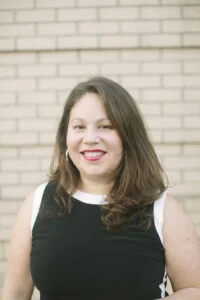
Tara Sherry-Torres is the founder and creative director of Cafe Con Leche. Photo courtesy of Tara Sherry-Torres.

Tara Sherry-Torres is the founder and creative director of Cafe Con Leche. Photo courtesy of Tara Sherry-Torres.

Tara Sherry-Torres had a vision of neighborhood-based creative places that would engage and connect Latinos in Pittsburgh, and share Latino culture to Pittsburgh.

“Working in community development, I saw a lack of places, events and venues that diverse groups of people could come together, hangout, enjoy some culture and each other’s company,” said Sherry-Torres.

This inspired her to create Café Con Leche, and since January 2014, it has hosted 25 pop-up events around the city working with galleries, nonprofits and businesses.

“I like to get to know people,” Sherry-Torres said. “That is just who I am. I knew that’s where outreach comes from. Personal relationships are the most powerful ways to build a network of people.”

The Cafe Con Leche group planning events.  Photo courtesy of  Tara Sherry-Torres.

The Cafe Con Leche group planning events. Photo courtesy of Tara Sherry-Torres.

She believes diversity is important for business because the ideas matter. Hiring a diverse staff also will create wider markets.

“The more diverse your team is the more ideas you have,” Sherry-Torres said. “Making sure you have diverse employees and listening to ideas can give new ideas on how to operate.”
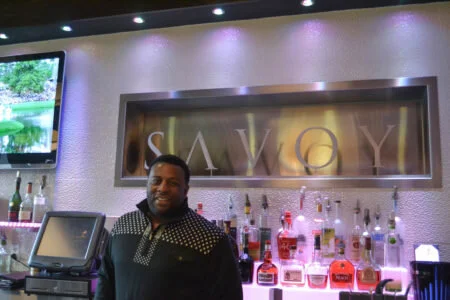
John Bettis is the executive manager of Savoy Restaurant. Photo by Tyler Polk.

John Bettis is the executive manager of Savoy Restaurant. Photo by Tyler Polk.

Savoy Restaurant is an African American-owned restaurant that was founded in May 2011. Its key to surviving the tough restaurant business is providing great service no matter who the clientele is.

“We feel that providing great service outdoes everything inside the restaurant business,” said John Bettis, the executive manager of Savoy Restaurant. “When you think back to a memorable experience dining, you think about how the staff was attentive, and then how good the food was.”

Bettis believes that planning is the difference between black businesses succeeding or failing in Pittsburgh.

“You’re looking at [who] your target audience is and what they like,” Bettis said. “Once you execute the plan and open your business, you operate like any other company”.

Chef Andre Robinson (Left) giving instructions to Tyrone Wright (Right). Photo by Tyler Polk.

Chef Andre Robinson (Left) giving instructions to Tyrone Wright (Right). Photo by Tyler Polk.

His advice to minority millennials wanting to start their own business is to research the industry before taking the leap of faith.

“If you know [how business operates] take the step,” Bettis said. “Make sure you have a firm plan of who your marketing to, and do it.”

Gary White, director of sales and marketing, (Left) and Jackson Forosisky (Right). Photo by Tyler Polk.

Gary White, director of sales and marketing, (Left) and Jackson Forosisky (Right). Photo by Tyler Polk.

Rice Enterprises LLC independently owns 13 McDonald’s restaurants in the Pittsburgh Area. It began with James Rice working his way up from crew member to management. He would later buy his first McDonald’s restaurant in 1987.

“We have a good infrastructure,” said Michelle Rice, Co-CEO of the Rice Corporation, alongside her sister Melissa. “I think your business, wherever it is, must reflect the neighborhood it is in.”

As the owner of the corporation, she is a part of doing the second interview for managerial positions. Other hiring is done by the incumbent general manager and other staff supervisors.

“We look for a person who is a leader, displays those skills daily, has the energy to motivate a team, has a good work ethic and does whatever it takes to be successful,” Rice said.

How Diversity Affects Millennials and Education

Niecy Dennis, WDGA President and Founder, with Volunteer of the Year, Sue Hobart. Photo by Debbie Norrell.

Niecy Dennis, WDGA President and Founder, with Volunteer of the Year, Sue Hobart. Photo by Debbie Norrell.

Niecy Dennis founded Workforce Development Global Alliance (WDGA) in 2006 to promote economic self-efficiency through peace and employability of disadvantaged youth in Kenya after visiting a school in Africa named after her late father, Archie Dennis, in 2004.

“I was overwhelmed by the lack of opportunities, and the lack of opportunities afterward for those who got an education,” Dennis said.

She created the “School 2 Work” program to connect the Kenyan children to an alliance of companies to get jobs and promote peace.

The program was a success until 2008, when tribal wars were creating conflict in Kenya. During the wars and riots, the school was burned to the ground.

“I realized that while focusing on the workforce and job readiness was a good start, I needed to teach conflict resolution for the program to be more effective,” Dennis said.

She later renamed the program “2 Steps 2 Work” and took the unprecedented step to move the program to Pittsburgh. Since 2011, it has operated at the Carnegie Library of Homestead.

“They told me reaching out to kids in Kenya was a no-no, then reaching out to kids in disadvantaged areas in Pittsburgh was a big no-no,”  Dennis said.

Dennis said people told her if she went to Washington, Atlanta, Los Angeles or New York, she would be better off because of their diversity.

The six to nine-week program teaches all those skills and builds cultural competency through community projects with 16-25 year-olds, and even a trip to Kenya.

“What really makes [millennials] marketable is when they are culturally sensitized, they value diversity and are used to working on a team, and getting out of their comfort zone,” Dennis said.
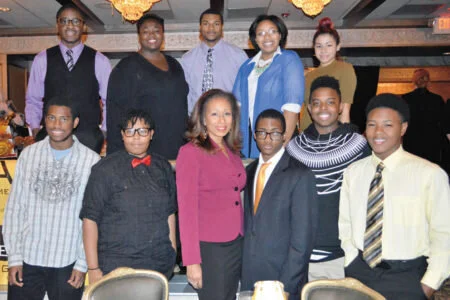
The WDGA Class of 2015 and Tamara Tunie, a Homestead native (Center). Photo by Debbie Norrell.

The WDGA Class of 2015 and Tamara Tunie, a Homestead native (Center). Photo by Debbie Norrell.

Dennis graduated 12 kids from the program last summer, and four graduates still have jobs that they work at the end of the school day.

“We need to have communities where our children are raised to understand backgrounds and cultures,” Huguley said. “That will make us more informed and more intelligent and capable.”

The challenge for Pittsburgh, as a region, is to have a sellable proposition to minority millennials.

“We are essentially competing with other regions for our young people coming out of schools,” Harrington said.

Pittsburgh is trying to market to a younger audience and retain the college students who live here. It’s still struggling to retain the diversity. Pittsburgh as a city still holds thoughts, emotions and prejudice towards minorities.

“The region is older and looming retirements will have a lot of positions to fill,” Harrington said. “We need to get our skills up, hire and bring people to the region.”

A challenge for people coming directly out of school is the lack of a network. They have to build their social networks to connect and get opportunities they want.

Thomas Jamison, who was born and raised in the Hill District, has accomplished a lot of things he didn’t think was possible for someone from Pittsburgh.

“Each step along the way, someone extended their hand to help convince me I was the right person to make that leap,” Jamison said.

After graduating from Schenley High School, he attended California University of Pennsylvania. He could not finish his degree there due to a knee injury in 2004, which wouldn’t allow him to work.

“My full-time job at Best Buy was paying for my car and apartment while I was in school,” Jamison said. “Between the inability to work and rehab, I could never get back.”

After recovering from his knee surgery, he applied for a call center job at PNC in 2005 to work alongside one of his cousins. Right after his training, PNC put him on a special project for building a business platform for its website.

“It was a trial, I was a liaison between the project managers and the customers,” Jamison said. “Anything that involved the growth of a business, you were talking to me.”

After PNC felt that the platform was good, they wanted him to find a new assignment in the bank to work on. His cubicle sat outside the Territory Business Sales Manager’s office.

“He would always ask me for help for using the operating systems,” Jamison said. “Whenever he found out about me needing a new place in the office, he pushed me to become the Banking Relationship Manager.”

He was hesitant to take the job at first, but he was convinced to help small businesses.

“It was a great experience working with small businesses for 4 years, but I was in a place where I needed to do something different,” Jamison said. “I wanted to help people in a different way.”

He left PNC in 2010 to do independent consulting and event planning for nonprofits, and along with a friend he did nightclub promotion and entertainment booking. One year after leaving PNC, he was told by a friend that Mayor Luke Ravenstahl was giving away free building spaces Downtown.

The space he was given would become the Dream Cream Ice Cream Parlor, where he is the founding president.

“After spending half a decade each in the for-profit and nonprofit sectors, I feel the business model of selling a product everybody loves is the best way to go about business,” Jamison said. “Ice cream lends its way to the mission of helping people by giving the proceeds towards a personal goal or charitable cause.”.

Melanie Harrington, the Founder of Vibrant Pittsburgh. Photograph by Vania E. Arthur.

Melanie Harrington, the Founder of Vibrant Pittsburgh. Photograph by Vania E. Arthur.

In 2010, Harrington, who left Atlanta, Georgia from her previous position as President of the American Institute for Managing Diversity, received a call.

They found her on LinkedIn and told her about the renaissance Pittsburgh was going through economically and environmentally, and how they wanted to secure that with diversity and inclusion.

“They sold me on that, and I thought it would be exciting to be a part of this,” Harrington said. “I’m encouraged. There are some people in leadership roles in this community that are helping to lead the way.”

Commitment to diversity, equity and inclusion has to happen throughout all facets of the corporations and businesses.

“You might have a President or CEO committed, but maybe the mid-level workers aren’t committed,” Stevens said. “I want the commitment to be real, and a part of the culture.”

Allegheny Cleanways Tackles Dumpsites by Land and Sea

Gary Smith and Evan Clark at a Driftcombers event. Photo by Tyler Polk

Gary Smith and Evan Clark at a Driftcombers event. Photo by Tyler Polk

Audio Captured by Tyler Polk

Additional Reporting by Olivia Ruk

When Joe Divack ran out of things to do after retirement, he decided to clean up dump sites after seeing a huge mess outside of a cemetery.

A love for the rivers is why Evan Clark can constantly be found out on the water during boating season, ridding the rivers of trash.

Myrna Newman has made a career teaching people about the perils of littering and illegal dumping in Allegheny County.

These three people are a part of Allegheny Cleanways, a non-profit organization that was formed in 2000, and is a chapter of Keep Pennsylvania Beautiful, bent on using three different programs by land and on rivers to tackle littering and illegal dumping.

“The reason why people do this falls into different categories,” says Newman, the Executive Director of Allegheny Cleanways. “They do it for convenience, or there is accidental dumping not realizing you dropped things.”

Allegheny Cleanways has three different programs that tackle littering and illegal dumping by land and sea.  They are “Dumpbusters”, “Tireless”, and “Driftcombers”.

Dumpbusters

Maggie Grace, Al Chernov, Didi Grace, and Joe Divack surveying the work at a Dumpbusters cleanup. Photo by Tyler Polk

Maggie Grace, Al Chernov, Didi Grace, and Joe Divack surveying the work at a Dumpbusters cleanup. Photo by Tyler Polk

“Dumpbusters” is a small group of three or four volunteers that clean dumpsites year round. These dumpsites could be on hillsides, open lots, forests, and garage spaces. They have cleaned in the neighborhoods of Elliott, Hazelwood, Larimer, Beltzhoover, Allentown, Knoxville, East Liberty and more. They collect an average of between 1500 and 2500 pounds of litter per cleanup.

Divack, who is also Assistant Director of ACW, founded this program in 2010 after he visited a friend’s grave and was outraged by a large amount of trash on the outside of the cemetery’s chain link fence.

“I found water heaters, car batteries, tires, debris, plastic bottles, toilets, and plastic bottles,” says Divack. “It was spread out all over the place in a large area. I thought it was really disrespectful.”

Cleaning the outside of the cemetery was his first ever pickup job. It grew over the years, often causing him to wake up again and again to clean illegal dumpsites he found until they were gone.

“I enjoyed it, and I just kept doing it,” says Divack.

Joe Divack
Al Chernov and Joe Divack picking up roof tiling in a garage in Beltzhoover. Photo by Tyler Polk.

Al Chernov and Joe Divack picking up roof tiling in a garage in Beltzhoover. Photo by Tyler Polk.

He joined Allegheny Cleanways in 2010 after finding out about the organization. He decided it would make sense to join the organization to make an even bigger dent in Pittsburgh’s illegal dumping problem.

In 2010, he won the Allegheny Cleanways “Volunteer of the Year” award, and in 2012 he won the Jefferson Award for his active service by cleaning up dumpsites. He volunteered almost 2000 hours in 2012.

“I consider the award as one of my greatest achievements cleaning dumpsites,” says Divack.

Tireless and Driftcombers

Evan Clark the boat pilot for Tireless and Driftcombers aboard “The Rachel Carson”. Photo by Tyler Polk

Evan Clark the boat pilot for Tireless and Driftcombers aboard “The Rachel Carson”. Photo by Tyler Polk

Evan Clark is the only boat pilot for Allegheny Cleanways and he also runs the boat for a project called “Tireless” and the “Driftcombers” Program.

He has a love for the river that spans from very early in his life, “I lived on the river and worked on the river for years, there’s nothing I love more than sharing my experiences out here,” says Clark.

He fixes and builds homemade boats and has sailed thousands of miles in numerous areas of the nation.

Clark joined the “Tireless” Project in 2007 while he was the Facilities Manager at the Three Rivers Rowing Association. “Tireless” hosts large events with volunteers that are typically not trained or experienced enough to handle the tougher river cleanups, which of course, include plucking worn tires out of the water.

There are plenty of crazy things out on the river he has found.

A wooden shack found on the water in Lawrenceville. Photo by Tyler Polk.

A wooden shack found on the water in Lawrenceville. Photo by Tyler Polk.

“I’ve found safes, sex toys, messages in bottles with money in them, and alloy car rims,” says Clark. “I’ve even found a Mylar Weather Balloon drifting out [on the water]. It was powered by a sulfur battery that made it stink.”

He created the “Driftcombers” program in 2013 so he could tackle those jobs with groups that are smaller, yet more experienced and prepared for the rigors of these cleanups. They also worked on scouting areas that could be a part of future “Tireless” events.

“The Youghiogheny River is an area we haven’t worked in before, so I went in with volunteers and worked through the area to get a better idea of where trash was and what the dangers could have been,” says Clark. “Just survey the area while doing a cleanup.”

Both programs use a pontoon boat called the “Rachel Carson.” It’s named as after America’s foremost conservationist, who lived in Springdale.

A full day’s work with the Tireless Project in Lawrenceville. Photo by Tyler Polk.

A full day’s work with the Tireless Project in Lawrenceville. Photo by Tyler Polk.

Resources and Education

Allegheny Cleanways does much more than just clean up dump sites. They also work to educate the public on the cause using resources like the “Litter IQ Board.”

It is an interactive game that shows what kind of litter stays in the environment, how long certain types of litter last, and how to safely get rid of litter.

For instance, the board will display 12 common litter items and lists 11 possible decomposition times.  They would have to match the correct decomposition times with the litter item.

They also have coloring books that teach children the importance of knowing what littering is, how it affects the watershed and teaches them better ways to throw away their trash.

myrna.jpg

“We go to schools and public events like festivals to teach kids and the community about their organization and how to stop littering and illegal dumping,” says Newman, Executive Director of Allegheny Cleanways.

Myrna Newman

Many of their resources come from Keep Pennsylvania Beautiful, their parent company.

“Allegheny Cleanways does a good job of monitoring local dumpsites and connecting with volunteers,” said Shannon Reiter, President of Keep Pennsylvania Beautiful, who was recently elected to serve on the Keep America Beautiful board of directors for her hard work and dedication.

Determined members like her have played a major role in coming up with new cleanup strategies. One program that has been recently developed is called, “Illegal Dump Free PA”. This program aims to expose illegal dumpers using small and concealable hidden cameras. The surveillance camera kits are given as grants to eligible groups.

“Our staff members even go out to the site to set it up for them,” said Sue Urchek, Program Coordinator of Keep PA Beautiful.

These cameras begin capturing when triggered by movement and wirelessly transmit pictures to computers and cell phones via text message.

“They work at night too, and sometimes they can capture license plate numbers,” said Urchek.

One particularly successful bust was made by Keep PA Beautiful’s surveillance recently in Collier, where people were caught on camera illegally disposing of old furniture and other household items such as a microwave and television.

One example is in Collier, where police charged three individuals with illegal dumping.  Each was fined $1,000 and forced to pay for proper disposal of the items.

“This has been a great success in exposing dumpers,” said Urchek. “It started out just five counties wide; it was so influential that we received enough funding to make it statewide”.

This program is now being used in Allegheny County.

“We do a lot to increase public education on the issue and talk about the importance of keeping it clean—through radio, TV, articles, and events,” said Urchek.

The greatest indicator towards the progress of eliminating illegal dumpsites in Allegheny County is the map of illegal dumpsites in Allegheny County.

The 2005 report documented 202 reported dumpsites in the City of Pittsburgh.  By 2009, it had grown to 279 reported dumpsites.

“The initial surveys gave us a starting point, and we began a systematic cleanup,” says Newman.

Allegheny Cleanways has since identified 550 dump sites around the city, and they record the sites to its website’s map of illegal dumpsites (http://www.alleghenycleanways.org/dsadmin/public/map_dump_sites.php)

They have marked their dumpsite map with color coordinated tags showing categories such as surveyed, partially cleaned, in progress, completed, and river cleanup sites. When the viewer clicks on a dumpsite, they can access statistics like originally estimated tons, the actual estimated amount, and if the trash is visible from the road.

Work on the Northside

Currently, Allegheny Cleanways is concentrating on the North Side and have accessed six neighborhoods, for illegal dumping at the end of September and beginning of October.

Al Chernov of “Dumpbusters”, and Sam Weaver it’s North Side Project Coordinator do the assessments.

Sam Weaver of Allegheny Cleanways. Photo by Tyler Polk.

Sam Weaver of Allegheny Cleanways. Photo by Tyler Polk.

They travel around the North Side to find and access dump sites and report them.

“We’re hoping the goal with the assessing process is that we could go into neighborhoods, find all the dumpsites and give those communities a clean slate,” says Weaver.

Allegheny Cleanways is trying to be a presence on the Northside working alongside any previous cleanup efforts and trying to find more volunteers for “Dumpbusters,” and thinking of ideas and events to help their anti-litter campaign.

“Were trying to build a volunteer base and ultimately responsibility coordinating for volunteers on a different day,” says Chernov.

Joe Divack, Didi Grace and Al Chernov cleaning up a garage in Beltzhoover. Photo by Tyler Polk.

Joe Divack, Didi Grace and Al Chernov cleaning up a garage in Beltzhoover. Photo by Tyler Polk.

Chernov has been volunteering with “Dumpbusters” since November 2012, while he was still a resident of Miami, Florida. He decided to join Hannah Grace, a mutual friend and Allegheny Cleanways’ 2013 Volunteer of the Year, on a cleanup.

Al Chernov

He was interested after hearing stories from Grace, and his first job was during the middle of winter.

“It was a little crazy, because I was on a frozen over hillside,” says Chernov. “There were tires frozen into the ground and we [himself, Grace and, Divack] were beating them out of the ground.”

Despite the less than enjoyable conditions, he considered what they did a good day’s work.

“It was satisfying, when I took a look at the truck there was 40 tires inside of it,” says Chernov.

It was so satisfying for him, he would come back to Pittsburgh while on vacation to clean illegal dumpsites over the next year, before eventually moving to Munhall in 2014.

Weaver, who is in a fellowship with Allegheny Cleanways from Pittsburgh Pulse, began her work in September.

She is creating “litter letters,” giant letters that are made in rebar and wrapped in chicken wire that people can fill with litter to avoid illegal dumping. Then she wants to create a big project, and have all the neighborhoods in the North Side clean up neighborhoods. They are meeting with community members to raise awareness of littering.

Sam Weaver

“People are excited to hear that we are focusing on the North Side,” says Weaver.

She will be working with Allegheny Cleanways for one year thanks to her fellowship with Pittsburgh Pulse, she wants to concentrate on the year of service she has right now rather than think too far ahead.

“It’s not reasonable to think the cleanup on the North Side can be done in one year. So setting people up for success in the future, would be one of my biggest goals,” says Weaver.

Those who participate in cleanups know that it is important to not get discouraged, even if people try to continue dumping in the area.

“Persistent dumping sometimes does occur, but not always,” said Urchek. “Many sites do stay clean because there are people in the local community who participate in cleanups that care and continue to keep an eye on it,” said Urchek.

Signs are often installed to warn dumpers of the consequences and many sites are even taken over by members of the “Adoption Program.”

Allegheny Cleanways works very closely with communities on keeping eyes on dumpsites that could be dumped on again. Some, like a dumpsite on Gearing Avenue in Beltzhoover, have been repeatedly turned into trash heaps.

The Garage on Gearing Avenue in Beltzhoover completely clean. Photo by Tyler Polk.

The Garage on Gearing Avenue in Beltzhoover completely clean. Photo by Tyler Polk.

“That site was brought to our attention by community members, neighborhood watch groups, and neighborhood council,” says Newman, stating there were lots of people watching.

If Allegheny Cleanways or the authorities felt any of the volunteers lives would be in danger if they continued to clean dumpsites, they would stop the cleanups.

On this day, the dumpsite was a garage in Beltzoover; and inside, Chernov found a semi-automatic AK-47 rifle. After the appropriate authorities were called, the cleanups continued.

The reason why Dumpbusters and Driftcombers were created was to do jobs that the communities don’t feel comfortable doing. A lot of those jobs have to do with hillsides, especially in poor conditions.

Janee Romesberg, the Programs Director for Allegheny Cleanways. Photo by Tyler Polk

Janee Romesberg, the Programs Director for Allegheny Cleanways. Photo by Tyler Polk

“What makes them challenging is making sure people on slippery terrains are safe carrying heavy objects,” says Janee Romesberg, the director of Allegheny Cleanways.

Romesberg joined the organization in March, and she knows that volunteers are always in danger with the dumpsites.

Janee Romesberg

“With glass and sharp objects, these are all considerations we make, but we have a good track record with no injuries on the job,” says Romesberg.

She believes that hillsides are the toughest to clean and a Hazelwood street was the toughest to clean.

“The hillside is right along a sidewalk at Glenfield Street towards a school. There was a high level of litter, it was falling into a neighbor’s yard,” says Romesberg.

Despite their best efforts,  Allegheny Cleanways hasn’t been able to truly cover some areas in Pittsburgh. Most notably the Mon Valley and McKeesport, areas that they want to reach.

“It’s a steep area along the river and a prime area for dumping with the vacant area,” says Newman.

It’s an area that has a lot of “legacy trash”. Legacy trash is litter, that has been left for a long time; sometimes the trash is dated from the 1950’s and earlier.

“There once was a time in or country where we threw trash out of windows or down a hillside. Some of the trash would decompose or rust away,” says Newman. “Only tires and glass would remain.

Phipps Conservatory and Kennywood Host Holiday Events

Phipps Conservatory has a new theme for their Flower Show and Light Display event called Winter Wonderland.

Kennywood’s Holiday Lights event has an expanded Dinner with Santa program this year.

These are one of the many highlights for this year’s biggest Holiday Light shows in the region. 

People can drive to other events in the region like the new train displays at the Carnegie Science Center, the PPG Winter Garden and the Oglebay Festival of Lights to name a few.

“This is a really special time of the year,” said Jordyn Melino the exhibit coordinator at Phipps Conservatory.

The conservatory has had winter flower shows for 100 years, based their Winter Light Garden off the classic carol bearing the same name, and they have doubled their light Garden, in its third year by creating a new outdoor exhibit. 

Winter Flower Show, is designed by Terra Design Studios, LLC, and the Winter Light Garden is designed by Melino.

The event at Phipps Conservatory began last Friday and will run until January 11th.

Every evening the conservatory will hold a ceremony where they will light over 150 candles every evening at 5 pm.

“They are located throughout the conservatory, it gives a little bit of shine and sparkle to the conservatory at night,” said Melino in a phone interview. 

Kennywood’s Dinner with Santa event is being held on four days instead of one. The dinners are held December 6, 13, 14 and 20 the dinners begin on 3:30 and last until 4:30. 

It costs $26.99 for adults, $23.99 for ages 3 through 12, and free for children 2 years and under.

Holiday Lights also begun last Friday and will run until December 21st

The fourth annual Holiday Lights will also have three to four choir groups performing every night and celebrity guest readers performing Twas the Night before Christmas.

“They are [the guest readers] mostly KDKA personalities with a few others mixed in, like Steven Cropper of WPXI and film director Rick Sebak,” said Jeff Filicko the Public Relations manager at Kennywood Park.

Phipps Conservatory is partnering with Toys for Tots and encourages to donate new, unwrapped toys until December 15th.

The conservatory will also have an early New Year’s Eve Celebration and all activities are free with admission to Phipps.

“It’s a magical time because we go above and beyond, the typical flower shows during the year we do,” said Melino.

The conservatory holds a 30 minute creative dance class and story time session in conjunction with the Pittsburgh Ballet Theatre 

Kennywood has many rides available during Holiday Lights, the most notable is the Gingerbread Express, a Christmas themed version of the “Olde Kennywood Railroad”

“I’ve worked here the last three years during Holiday Lights, almost exclusively on the railroad and it’s a fun to see how people get in to the festive spirit of the year,” said Edward Walker a ride operator at Kennywood.

Admission to Kennywood are $16.99 at the gate, and free for children 2 years old and younger. You can get unlimited visits to Holiday Lights for $24.99

Admission for Phipps Conservatoy are $15 dollars for adults, $14 dollars for seniors and students, and $11 dollars for children ages 2 – 18. Members and kids under 2 enter free.

For more information on events, times of openings and more log onto phipps.conservatory.org/exhibits-and-events and http://www.kennywood.com/holidaylights.

This story was published in Point Park University’s The Globe.

Pittsburgh Police Tested Body Cameras Before National Outcry

Before the shootings of Michael Brown in Ferguson, Missouri and Leon Ford Jr. in Pittsburgh. The city’s public safety department started testing arming Police officers with cameras to record all events during arrests.

Not to protect one side or another during confrontations, but to make an unimpeachable record.

“When they tell a citizen they are being recorded, that changes the dynamic [of the situation]” Toler said

In 2012, the city of Pittsburgh bought 50 cameras and used them until February 2013 until realizing that this violates the state’s wiretap laws.

In February, former Governor Tom Corbett amended the law allowing the use of the cameras.

“Currently only 35 of the 50 cameras are deployed on some of the bike and motorcycle officers and they must inform citizens when they are in any kind of encounters with them,” said Sonya Toler the Pittsburgh’s Public Information Officer.

The cameras being used are called the AXON Flex made by the company Taser International known for the stun guns police also use.

The company based in Scottsdale, Arizona started by creating cameras for stun guns in 2005, it would capture the instances in which it was aimed at or deployed on someone.

Taser International created the AXON Flex in 2009 a camera that can be attached to an officer’s sunglasses. It was the first body camera the company made for law enforcement.

“We wanted [the cameras} to be a neutral observer when force is used and a lawsuit was filed with an unnecessary force it would provide clear evidence for the public,” said Steve Tuttle, the Vice President of Communications at Taser International.

As of the second quarter more than 12,000 police departments use their equipment for recording police interaction, with orders as large as 615 in cities like Fort Worth, Texas.

95 plus percent of Law Enforcement video has resulted in exoneration of officers. With the creation of cell phone cameras, civilians primarily record video of the police using force, but not why they are using force.

“We wanted [the cameras} to be a neutral observer when force is used and a lawsuit was filed with an unnecessary force it would provide clear evidence for the public,” said Tuttle in a Phone Interview.

Pennsylvania is one of 12 states in the United States of America to have a wiretap law. Pittsburgh Police also wear mics, and that is another part of the Pennsylvania wiretap law. There has to be two party consent if an officer does an audio recording.

Prior to the law being amended the only cameras that were used by the police were the ones inside a police vehicle.

“The video alone is not enough to show exactly what is going on, so we need the audio and on regular patrols they go in a private residence or another situation and the cameras are still running, we don’t want our officers to be disciplined for breaking some sort of law,” said Toler in a phone interview.

Taser International has seen the two party consent rule affect the use of it’s product in a lot of states, including Pennsylvania, but legislatures around the country are making changes.

“There’s a challenge on getting the these items that the public and police want to wear and yet there’s two party consent and that’s very challenging, many of the legislature are resolving this, technology is changing so rapidly, and they adjust to the changes”, said Tuttle.

Right now the officers in Pittsburgh with the cameras are giving feedback to the police chief that the cameras are a form of officer safety.

An officer said this but were granted anonymity because they were not authorized to comment to the press.

“It can be good and bad, it could help figure out whether suspicious activity, but people could play into the camera and not allow an officer to be comfortable doing their jobs.”

This story was unpublished but used for credit in a reporting class.

Annual Three Rivers Film Festival Showcases 65 Movies

For freshman cinema major Zachary Brown, the film he wanted to see was “Homemakers,” a story about an indie rocker who comes to Pittsburgh to restore her great-grandfather’s house, but her propensity for chaos creates problems.

“I’m really excited to see this movie because it’s a comedy, and Shelia McKenna, the head of the Conservatory of Performing Arts department, is in the film,” Abigail Cagle, a sophomore acting major said.

Another film that has spurred interest is “Foxcatcher,” starring Channing Tatum, Mark Ruffalo and Steve Carrell. The film is about the true life story of Olympic Wrestler Mark Schultz.

These two films along with other films such as “The Overnighters” and “Goodbye to Language,” were a part of the opening night of the 33rd annual Three Rivers Film Festival presented by Dollar Bank and Pittsburgh Filmmakers.

“There are a broad range of films in the festival this year, ranging from American to International, new releases, as well as indies, classics and restorations,” said Amy Edwards, the Marketing and Development assistant at Pittsburgh Filmmakers.

The festival began on Nov. 7 and continues until Nov. 22, with 65 total films playing at four theatres and four micro-cinemas.

In addition to showcasing films, the festival also features visits from some of the filmmakers, along with informal discussions and live music events.

“The festival itself is a good showcase to see what local people can do and gives a chance for local people to enter [films]. Hopefully one day I could have an entry in the festival,” said Daymon Long, a freshman cinema production major.

There is Oscar-buzz surrounding many of the films being showcased at the festival, including “Foxcatcher,” and the seven foreign nominations: “Beloved Sisters,” “Concrete Night,” “The Dark Valley,” “Gett: The Trial of Viviane Amsalem,” “Human Capital,” “To Kill a Man” and “What Now? Remind Me.”

There are also five films from Poland: “Gods,” “The Heart and the Sweetheart,” “Jack Strong,” “Life Feels Good” and “Saragossa Manuscript,” that were brought to the festival by the Polish Cultural Council.

Every year, the Three Rivers Film Festival presents family films and this year, they are presenting five: “Belle and Sebastian,” “The King and Mockingbird,” “The Lost World,” “Spirited Away” and “Welcome to the Space Show.”

“It’s hard to pick a favorite film, there are so many good films in the festival. I love that this is a huge city-wide event and that we have broader visibility, participation and audiences,” Edwards said. “It’s a great way to introduce people to [Pittsburgh Filmmakers].”

In addition to “Homemakers,” the film “Umbrella Man,” which was developed for stage and screen by Point Park University, was showcased at the festival at the Melwood Screening Room on Saturday, Nov. 8.

“It’s my first time going to this event to see what they do there and what the criteria is. After going, I could learn from it and hopefully submit something eventually,” Brown said.

For more information on films, their show times, locations, cost of admission and other special events log on to http://3rff.com/.

This story was published in Point Park University’s The Globe.

Humans vs Zombies Game to Take Over University

Shae Wofford and Table Top Tirade, a board game club at Point Park, saw an opportunity to unite the student community.

The club is hosting a game of Humans vs. Zombies within the next few weeks. The game will officially begin when it receives the bandanas that are used to tell the humans apart from the zombies.

“We wanted to try something to bring a little bit more community, and break the barriers between the different majors within [the University],” Wofford, a sophomore Sports, Arts, and Entertainment major and a moderator for the event, said.

Humans vs. Zombies is a tag team game where humans try to avoid getting tagged by zombies by using rolled up socks or Nerf guns to “stun” them, rendering them unable to tag any human for 15 minutes.

If the zombie player does not “feed” or tag a human within 48 hours, he or she is eliminated from the game. The game is over when the zombies fail to tag anyone or when all humans are turned into zombies.

The game was created in 2005 at Groucher College in Towson, Md. and has since gained popularity in college campuses across the United States. Locally, the University of Pittsburgh participates every spring.

The game is also played in schools, neighborhoods, libraries, conventions and even military bases around the world.

“Other people at Point Park played a similar game called Assassins last year,” Wofford said. “We tried to do it last year, but another group snatched it up.”

Despite the popularity of the game, this will be the first time it has been played at Point Park and will be the first for both the moderators and participants of the game.

“I have played similar games in high school like Jason Bourne tag, but I haven’t played the official Humans vs. Zombies game until now,” Emily Bowen, a junior mass communications major and President of Table Top Tirade, said.

The club was interested in the game because it is a fun way to celebrate Halloween, and it represents what Table Top Tirade was created for.

Table Top Tirade explores the culture of gaming through board games, collectable trading card games and role playing games.

The club even has other ideas for gaming that go beyond board games.

“We’re trying to plan this 24 hour gaming marathon with board games and console games. It might become 12 hours, but we are trying to work it out right now,” Luis Ortiz, a freshman cinema major, said.

The club plans to start another game of Humans vs. Zombies in the future.

“We might plan to do this for years to come, but we’re using this first session…to see what we need to improve for future games,” Bowen said.

There are currently 15 humans registered for the game but no one has yet to be chosen to be a zombie.

For more information on the rules of the game and to sign up, log onto hvzsource.com/pointpark

This story was published in Point Park University’s The Globe.

Students Uninterested in Midterm Elections

As many as 48.5 percent of millennials turned out to elect Barack Obama to presidency twice, but during the 2010 midterm elections, that number was reduced to only about 15 percent in Pennsylvania.

This drop in participation propelled conservatives to the governorship and U.S. senators seats.

That is why Point Park’s College Democrats are meeting with the University of Pittsburgh’s College Democrats to work on the Get Out and Vote campaign.

They are attemptiong to register as many voters as possible this year to get people to vote in the elections because control of the Pennsylvania Governor’s Office and Congress will certainly be decided by 18-to-24 year olds.

“It’s important for both parties to know their stance; we’ve had Gov. Corbett for a while and there have been some issues especially with students, like the Pell Grant being threatened to be taken away,” Rachel Wyatt, president of the Point Park’s College Democrats, said in a phone interview.

In 2010, just two years after President Obama’s first victory in the presidential election, Republicans Pat Toomey and Tom Corbett were elected to the senate and governor’s chair, respectively.

They have since voted against women’s rights, gay rights, raising the minimum wage and have both participated in slashing the education budget.

The College Democrats are involved with the Tom Wolf campaign to get people registered to vote.

“We are asked, as citizens, who we want to represent us in the government. We don’t get our own personal voices heard most of the time, so we have to get our voices out through politicians that run for governor, senator, congress or state representative. We have to make sure we have the right people for our voices to be heard,” Wyatt said.

Wolf is leading Corbett, according to four independent polls, the Franklin & Marshall College, Muhlenberg College, Quinnipiac University and Yougov.

Pennsylvania is not the only state with upcoming elections.

“The important races are L.A., N.H., [and] N.C.. The Republicans may do well, but then again they may not. Some of the races are very close—really close—so attention is paid closely because they’re important,” Nathan Firestone, a political science professor at Point Park, said.

Many students come from outside the states and are familiar with the candidates of another state or city. Julian Ransome is from Washington, D.C., and he is following the hometown election.

“I’m focused on the mayoral race [of Washington, D.C.]. The current mayor, Vincent Gray, is running for reelection, and I plan on going back home just to vote [to re-elect Gray],” Ransome, freshman Mass Communications major, said.

Voting is important for college students and young voters, but Pennsylvania ranked forty-fifth out of fifty states in 18-to-24 year olds voting.

“A lot people don’t vote because they are not very educated on the political stances, and what’s happening in the government. They are focused on their career and schooling. A lot of people seem not to care to vote because they feel their voices won’t be heard anyway,” Wyatt said.

Many people believe their vote matters, despite their vote being the one of several.

Paul Fields, sophomore broadcast reporting major, has an interesting take on votes mattering.

“In truth and in terms of hopeless optimism…our country was founded upon democracy of getting out and voting. However, it’s up to the elected officials to do their jobs well and live up to the ideas that voters believe,” Fields said.

Voting is essential in a democracy that is for the people, but if the people don’t indicate who they want to take office and take action, then the system of democracy crashes. Millennials, 18-to-24 year old, tend not to align themselves with a political party, Republican or Democrat.

“The party system does not satisfy their political concerns, despite the changes over time to the parties, a lot of the negative commentary about politics comes from talk radio,” Firestone said.

Some students such as Annalise Bezri, sophomore Advertising and Public Relations major, don’t really know much about this year’s governor’s office candidates due to schoolwork, but has registered to vote.

“Yeah, it’s most likely [because of school], but when I turned 18, I registered to vote. It was an election year for the presidents. That was the only thing I voted for,” Bezri said.

Oct. 6 was the last day to register to vote, but the deadline to request for an absentee ballot in Pennsylvania is Oct. 28 and the return date for absentee ballots is Oct. 31. The general election day in P.A. is Nov. 4.

This story was published in Point Park University’s The Globe.

Pittsburgh Walk to Bring Awareness to Alzheimer’s

Aileen Lovett was four years old when her grandfather, Charles Robinson, was diagnosed with Alzheimer’s disease and she watched the memory-loss affliction ravage him most of her life.

“When you’re young, you don’t understand what that means. As I got older, I started to understand more and more [about Alzheimer’s],” Lovett, a staff member at the Alzheimer’s Association, said.

Lovett, who is so committed to stopping the disease that ended her grandfather’s life, earned a minor in gerontology at the University of North Carolina at Charlotte and worked in the field for two years.

That is why she will participate in the 2014 Walk to End Alzheimer’s on Oct. 11 on the North Shore near Heinz field.

“My goal is to make sure no family has to go through the stress of Alzheimer’s,” Lovett said.

Registration begins at 8 a.m., with pre-event festivities such as Zumba. Radio station BOB FM will be broadcasting live at the event, and Representative Mike Doyle will talk about his support of Alzheimer’s legislation.

Melissa Roberts, the event coordinator for the walk, is working the event for the third straight year and her favorite part of it is the Promise Garden ceremony.

“It’s an opportunity for people to honor those who are living with the disease, and remember those who have passed from [it],” Roberts said.

Each person who comes to the walk gets to select a pinwheel flower of four colors: blue represents those who have Alzheimer’s, purple is for someone who has lost a loved one to the disease, yellow represents someone who is currently supporting or caring for someone with the disease, and orange is for everyone who supports the cause and vision of a world without disease.

Suzanne Weessies, a family services coordinator for the Alzheimer’s Association, is working the Walk for the first time and believes it brings awareness to the cause.

“Most of the people who walk are people who are directly affected [by Alzheimer’s. They] spend months, even the whole year between walks raising money and awareness in their communities. It’s almost a celebration on the day of the event,” Weessies said.

The walk officially begins at 10 a.m. There are two routes used for the walk; a route that is a full mile and another route that is two and a half miles.

Point Park registered a walking team in last year’s Walk to End Alzheimers. No word was reached on whether students or alumni are walking in this year’s event.

“The routes do start together. We want to make sure people of all abilities are able to participate in our walk, and we made a shorter route for those who can’t complete the full two-and-a-half miles,” Roberts said.

There will be a live concert by the Blues Devils, a classic rock and blues band. Bob Sebastian, who plays lead guitar and does vocals for the band says the group was created for one reason.

“We’ve been together for four years and we got together with playing [music] to raise money for charities, and we play as many events as we can,” Sebastian said in a phone interview

The main symptom of Alzheimer’s is memory loss. In 2010 the disease played some role in the deaths of 500,000 Americans, and in 2014 an estimated 700,000 will die from the disease.

Of Americans aged 65 and older, one in nine has Alzheimer’s. One in three people aged 85 and older has the disease.

The people who work at the Alzheimer’s Association have their reasons to eliminate the disease.

“My reason to end Alzheimer’s is for the future,” Roberts said.

Weessies has worked personally with many families by caring for those with Alzheimer’s.

“It’s a vicious, horrible disease that should be gone so no one you love has to go through this,” Weessies said.

To learn more about the event, give donations or volunteer, log on to act.alz.org

This story was published in Point Park University’s The Globe.

Local Artists Celebrate and Bring Awareness to The Importance of Eye Health

Most Wanted Fine Art’s Nina Sauer and Caitlin Northup have worked together on previous silent art auction projects, but last year’s silent auction was miniscule compared to this one. In fact, they are certain that this is the biggest one yet.

“I’m really excited. Hopefully it will get bigger and bigger, help more people and grow every year,” said Northup, the creative director of Penn Avenue Eyewear.

On Sept. 12, Most Wanted Art Gallery and Penn Avenue Eyewear held their second annual Artistic Vision Exhibit and silent auction at the former Quiet Storm restaurant in Garfield.

There were art pieces from 32 different artists on sale from the silent auction, including 15 pairs of custom handmade wooden sunglass frames.

Ten items were sold in the silent auction and numerous others were bought before the auction commenced.

“This event is just looking to build community, and getting opportunities to provide resources and funding towards a good cause. So it’s a win-win for everyone,” said D.S. Kinsel, one of the artists auctioning their work to the people.

The proceeds were split between the artists and the two charities: The Bloomfield-Garfield Corporation that is working on redeveloping the communities of Bloomfield, Garfield, and Friendship neighborhoods and Healthy Artists, a corporation that fights to fix the broken health system and support the artists that are affected.

It showcased artwork like Kinsel’s painting called “Eye” and encompassed the great talent of all of the artists and performers. The mood of the room was upbeat, loud and very welcoming.

The event was hosted by comedian Davon Magwood, who performed a comical set that night with his opinions ranging from the Ray Rice scandal, the Pittsburgh Penguins and Floyd Mayweather’s reading level.

“I’m hosting and performing, but nobody wants anything I touch with paint. They’ll ask ‘Did a child do this?’” Magwood joked. “I did everyone a favor by not painting anything.”

Anqwenique Wingfield and pianist Joe Sheehan, who are two parts of the six piece band Kinetic, covered a variety of songs and debuted two original songs, “Show Me” and “World of Wonder” from the band’s self titled debut album due to be released in late November.

Wingfield, classical singer who wears glasses, explained the importance of vision in music.

“It’s important in the writing process, but your sight helps you connect with everything around you. Whether it’s reading music from a lyrics stand or trying to connect with my audience, [it] makes my glasses crucial” Wingfield said.

The artists who contributed work also received a free pair of prescription eyeglasses and sunglasses from the online eyewear store.

“This is special because we were able to commission some works of art, and give back something [the artists] really needed,” Northup said.

Artists typically work non-traditional, freelance jobs that do not give healthcare benefits, leaving them to fend for themselves.

Julie Sokolow, the head artist at Healthy Artists, has seen some people who have struggled to find care. It is not just painters struggling; it is musicians, comedians, and actors who are also having trouble.

“I go into their homes and interview them about being un-insured because they lack access to health care because [the United States] is the only industrialized nation that doesn’t have universal healthcare it’s a very bad situation,” Sokolow said.

A common theme of the night was the importance of vision to all forms of art, whether it was painting or other forms. At least 100 people attended the event at the spacious former restaurant.

Jason Sauer is the owner of Most Wanted Art Gallery, one of the coordinators of the event, and a visual artist himself, believes art is having forethought to the future.

“It’s the key to the job of an artist. Their job is to foreshadow the future and describe solutions, because if there are questions, then there’s a problem. It’s the artist’s role to realize the questions, problems and solutions,” Sauer said.

Rich Jackley, who co-coordinated the event, believes the visual arts are essential for vision.

“You have to see what you are doing because without your sight, you cannot create effective art,” Jackley said.

Zena Ruiz is a printmaker, who put her work “Oh Mother, Oh Father” up for auction, believes vision is important to her sculptures and printmaking.

“Being an artist you rely a lot on color, and not having vision puts you in a two dimensional world when you’re supposed to be in a three dimensional world,” Ruiz said.

But she still believes artists would be able to work.

“Maybe we would be making more powerful work, about the loss of vision,” Ruiz said.

Sue Kerr is a blogger at Pittsburgh Lesbian Correspondents and believes vision in blogging is having a big picture view on things.

“Vision should encompass the forest and the trees, so you need to pay attention to the details and make sure you’re looking at the whole landscape as well. One of the reasons why my blog is political is because…being a lesbian in society is political. It requires a lot of consciousness to topics,” Kerr said.

There are a lot of common perceptions on people who wear glasses..

Joe Wos, a cartoonist and a self-described ‘geek’ who created a 3D monster sculpture believes ‘geek’ is in.

“Everybody wants to be a geek nowadays.. I see all types…who run around with glasses as a fashion statement, and it’s very funny that geek is chic,” Wos said.

Holly Hood who is a hip-hop artist and teacher at The Art Institute echoed Wos’s statement.

“People now wear glasses because it’s cool and trendy. A lot of people wear glasses that don’t need them because it’s makes them a’ hipster’,” Hood said.

The event raised awareness on eye health for the other artists like Dante Lombardi, who does not wear eye glasses.

“I didn’t realize exactly how much glasses cost and what a pain it is when they break.. It brought a lot into focus for me,” Lombardi said.

Ricardo Iammuri, a former film and journalism major from the University, debuted his silent film “Mars is Underwater” with a live score performance from himself.

“I wanted to add another element [to art and film]. We’re living in a time that’s very audio and visual amongst social networking, so you should put everything into it,” Iammuri said.

The people who attended the gallery were very socially conscious and are artists in many different ways.

Vision is needed to succeed as an artist, musician, comedian, blogger and many other forms of work.

This story was published in Point Park University’s The Globe.

Charities Join Together for a Spectacle Event

A year ago, arts planner Nina Sauer of Most Wanted Fine Art met the socially conscious owners of Penn Avenue Eyewear at an event at the Hollywood Theater in Dormont. They began to explore ways that the eyewear company could help starving artists build collections and find health care.

A year later, they are joining together with the Bloomfield-Garfield Corporation, an organization uniting to rebuild the Bloomfield, Garfield and Friendship neighborhoods by energizing the members of the community and Healthy Artists, a corporation that supports artists’ health and fights to fix the broken health care system.

They created an event where artists will showcase and sell their work, some of which are wooden eyeglass frames.

“Some [glasses] are paint splattered and some are like graffiti,” Sauer said. “It is really interesting to see what artists can do with glasses as a canvas,” Sauer said.

All proceeds are split between the artists, the Bloomfield-Garfield Corporation and Healthy Artists charities. The artists will receive a free pair of eyeglasses from Penn Avenue Eyewear for prescription or non-prescription eyeglasses.

“We love working with them and we believe they do a lot of good for the community,” said Penn Avenue Eyewear creative director Caitlin Northup regarding the staff of Most Wanted Fine Art during a telephone interview.

All of the glasses will be sold in a silent auction during the Penn Avenue Eyewear Art Exhibit at 5430 Penn Ave., the site of the former Quiet Storm Restaurant, beginning at 6 p.m. and continuing until 10 p.m.

One of their artists in residence, Tara Sherry-Torres, has taken over the building for her Café con Leche project that builds, connects and promotes the Latino culture in Pittsburgh.

The location of the event was originally inside the former Pittsburgh Burger Company in Homestead, but the venue changed with the plans to shut down the former restaurant for the winter.

Jason Sauer, who owns Most Wanted with Sauer, said he believes the location change will work out for the better.

“It helps Tara gain awareness for the restaurant she’s creating and lets others know it will be open officially next week…It works well for Penn Avenue to have a restaurant and some artistic identity,” Nina Sauer said.

This unique event will provide a confluence of art and entertainment.

Comedian Davon Magwood will host the event and will feature musical performances by resident hip-hop artist Holly Hood, and classical artists Anqwenique Wingfield and Joe Sheehan.

Ricardo Iamuuri will present a silent film he directed, “Mars is Underwater,” while also giving a live score performance.

“Davon has hosted and performed a few comedy shows here, and I’ve only seen a few snippets of Ricardo’s silent film, but I know it will be great,” Nina Sauer said.

Nina and Jason Sauer’s gallery, which showcases work by 32 other artists, has garnered them numerous awards. The primary goal isn’t to sell art as much as it is to build community and help as many people as they can.

“We joke that we are a community service organization disguised as an art gallery,” Sauer said. “We work hard to help people get jobs and grants. Our goal is to be good people.”

This story was published in Point Park University’s The Globe.

Avid Baseball Fan Snags Free World Series Ticket

Erik Jabs is a Spanish teacher at Steel Valley High School. Photo submitted by Eric Jabs.

Erik Jabs is a Spanish teacher at Steel Valley High School. Photo submitted by Eric Jabs.

Erik Jabs has caught 2,887 baseballs in 17 different stadiums since 2007.

Recently, luck was on the 33-year-old’s side again, but this time instead of a baseball, he landed a ticket to Game 1 of the World Series in Boston for free.

Jabs, a Spanish teacher at Steel Valley High School, started looking for tickets on StubHub after the Boston Red Sox won the American League Championship. On Oct. 21, he saw a ticket listed for $6 and quickly bought it before anyone else could. A Pittsburgh Pirates fan and Jefferson Hills native, Jabs wanted to see the St. Louis Cardinals lose.

“I thought somebody made a mistake in listing it,” Jabs said. “Looking at the price, I thought the seller was extremely generous and wanted to give the ticket away for almost nothing.”

After getting an email confirmation from StubHub, Jabs printed out the ticket and posted a photo of his winnings on Twitter.

Media outlets, such as Deadspin, caught wind of the purchase and posted stories about the purchase of the ticket that night. Jabs’ story quickly went viral.

But hours after his purchase, Jabs received an email and voicemail saying the seller committed fraud on the price of the ticket. He was going to get his $6 back thanks to StubHub’s Fan Protect Guarantee.

Jabs called StubHub’s customer service hoping to get a ticket of comparable value, but no tickets in Fenway Park costs $6. He got a $50 account credit from them.

The next day his story went national, and StubHub caved from the pressure of negative publicity for its ticket service. It decided to give him the chance to sit anywhere in the ballpark for Game 1.

For the second time in his life, Erik Jabs was going to the World Series. He went to Game 4 of last year’s World Series and watched the San Francisco Giants defeat the Detroit Tigers in four games.

“He shouldn’t have fell for the fraudulent tickets,” said Alex Mitro, a former student in his Spanish class. “However, that lucky mistake ended up being a lifetime experience, so I’m happy for him.”

When he bought the ticket, his original seat was Section 97 Row WW. Jabs decided that it would be greedy to go somewhere else in the ballpark and decided to stay in the same section and move up to Row CC. His seats were located just past first base.

“If the story had never gone public, I probably would have never gone to the game,” said Jabs.

He flew out to Boston on the day of the game and made it in time for the St. Louis Cardinals batting practice.

He wanted to see if he could get any baseballs, so he started searching for them in the crowded center field bleachers. Jabs later moved to the left field stands because there were fewer people there.

Dressed like a Cardinals fan, Jabs tried for 20 minutes to get a ball from a Cardinals player.

He got one from Tyler Lyons, a player who didn’t make the Cardinals postseason roster.

Later, Jabs changed into the team’s colors of the Boston Red Sox, the team he was cheering for that night. Finally, when the Cardinals hit a ground-rule double, he got his second ball of the game.

“I only got two [baseballs] that night because there was a sell-out crowd. It’s well below my average of 6.7 balls per game,” he said.

Jabs is a “ballhawk,” or someone who goes to MLB games to collect as many baseballs as possible. He’s been doing this since 2007, amassing a total of 2,887 baseballs, including 731 this year. He collected a majority of them at PNC Park, home of his favorite baseball team, the Pittsburgh Pirates.

“His hobby is unique,” said Jamie Fleck, Jab’s friend and a former Spanish teacher at Steel Valley. “He’s the best at it, and believe it or not, there are other people who do the same thing.”

Jabs knows where a left or right handed batter’s power side is and makes sure he has at least one row to his left and his right empty, so his range is not affected by people standing around him. He dresses like the fan of the home or visiting team so the team throws baseballs at him.

 “It really works when a team from the West Coast comes to play the Pirates at home,” Jabs said. “It would be hard for fans in a city like San Diego, to fly 3,000 miles to watch them play baseball.”

His antics sparked a friendship with Pirates bullpen coach Euclides Rojas and bullpen catcher Heberto Andrade. They throw him baseballs, whenever they see him, whether on the road or in Pittsburgh.

Brandon Kintzler, a relief pitcher for the Milwaukee Brewers saw through his tricks last summer and teased him when he came to town. They shook hands and Kintzler said to him, “It was fun messing with you all summer.”

“It’s nice having relationships with players and coaches,” Jabs said.

Jabs visited 17 major league stadiums and hopes to visit all 30 stadiums within the next two or three years with his wife Amy and two children, Olivia, 2, and EJ, his 6-month-old son.

He went to 108 games this year. In addition to attending games at PNC Park, he  visited Comerica Park in Detroit, Progressive Field in Cleveland, Great American Ballpark in Cincinnati, Marlins Park in Miami, and Safeco Field in Seattle.

He has also been to other playoff games than the World Series. He attended every Pirates home playoff game this year, as well as this year’s American League wildcard game in Cleveland, one game of the American League championship series in Detroit and the 2010 National League division series in Cincinnati.

 Jabs plans to use his baseballs for batting practice with his kids.

“My family loves to travel,” he said. “In fact, we are quite bored now that it’s the offseason.”

Jabs claims the reason he manages to catch so many baseballs is because he follows the wisdom of the famous president of the Brooklyn Dodgers Branch Rickey who once said, “Luck is the residue of design.”